Monday, 28 September 2020

Digital Photography Equipment Review—The Nikon Coolpix P7100 Camera

Late summer 2011 saw the release of six new Nikon Coolpix cameras, including the P7100, which is an obvious attempt to take advantage of the success of the earlier Coolpix P7000. As smart companies will do, Nikon listened to what P7000 users had to say about the deficiencies of that model, and then gave consumers what they wanted in the P7100. There was nothing wrong with the previous model’s image quality, but the slow speed that received so many comments was improved in the P7100 by adding an EXPEED C2 processor that is typically found in Nikon DSLRs. Other slow operational issues were addressed to create less shutter lag and faster power-on time and focusing. Read review of Nikon Coolpix P1000 done by PhotographyTalk.com.

Read real customer reviews of the Nikon Coolpix P7100 here.

The Coolpix P7100 targets digital photographers that want more than a compact, or point-and-shoot, camera, but not the size, weight and price of a true DSLR. Yet, it is a substantial piece of equipment in your hands; and a close inspection reveals its design and manufacturing integrity. 
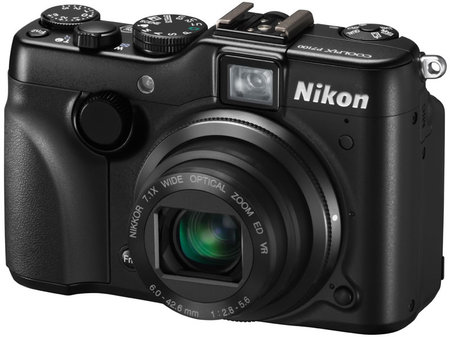
nikon_coolpix p7100-thumb-450x337 image

That’s what the P7100 delivers: Clean, exterior lines and a lens and optical viewfinder that might suggest a basic camera, but the insides are packed with many of the features and capabilities of a DSLR. These include a 10.1-megapixel, 1/1.7-inch CCD sensor; the aforementioned EXPEED C2 processor; 7.1x (28–200mm) optical zoom through a NIKKOR ED lens; three-inch tilting screen; RAW shooting; twin control dials; and plenty of buttons to access the camera’s various functions.

Nikon’s design team was able to configure the dials and buttons, so they appear neat and tidy. The challenge for many photographers moving from a compact is that they will be confronted with all these controls. If they choose to make this transition, however, then they should be prepared for the necessary learning curve. The P7100 is a far-more serious camera than most compacts, so it simply needs more points of control because it functions more like a DSLR. Plus, photographers new to a DSLR-type camera will only become confused and frustrated if they must scroll through various menus to operate the camera. If buyers of this camera are initially overwhelmed, then they can switch to the auto mode. Eventually, however, they’ll shoot better pictures and enjoy the experience more when they learn how to use the dials and buttons.

Nikon also listened when P7000 users thought it wasn’t quite as comparable as the Canon G series, especially the screen. The Canon series is a more established line, but Nikon’s P7000 was its first dog in this fight; and it seems to be ready to continue the battle with the P7100. That’s why it sports a three-inch tilting screen that can be manipulated 90 degrees above the plane and 45 degrees below. Although it doesn’t turn 180 degrees for self-portraits, a face-detection self-timer is a very workable alternative. Another improvement evident in the P7100’s screen is that the image is easily seen even in bright light. Of course, the P7100’s optical viewfinder doesn’t compare to a full-fledged DSLR, but it still makes it more like a DSLR than a compact.

There have only been a few opportunities to test the Nikon Coolpix P7100, as it wasn’t yet released at the time of this review; however, those that have put it through its paces report the picture quality is well above average, digital noise is kept to a minimum with the larger sensor and it does operate faster than the P7000.

There is every reason to think that photographers familiar with DSLR features and capabilities will seriously consider buying this camera. Some of those advancing from a compact for the first time may find it’s too big of a bite all at once, including the projected price of approximately $500. This may be the Nikon Coolpix P7100’s biggest downside: It costs as much as many first-time DSLRs, but doesn’t quite match their functionality and quality. Some consumers may react negatively to being asked to spend DSLR-level money for a camera that has been designed and is being marketed as something a bit less.

This blog post about "The Nikon Coolpix P7100 Camera Review" was first published on our website here https://www.photographytalk.com/photography-articles/1541-digital-photography-equipment-reviewthe-nikon-coolpix-p7100-camera

Details of Rumored Nikon D600 DSLR Becoming Clearer

If you’re a digital photographer who prefer Nikon cameras or are contemplating the purchase of your first Nikon DSLR, then take heart and maintain your patience. With each passing day, you (and the digital photography world) come closer to having an added choice, the Nikon D600 DSLR.


Long rumored, the D600 was previewed (albeit sketchy) in a PhotographyTalk article of late April 2012. Now, the picture is becoming clearer; in fact, at least one Internet source is displaying a picture of the new DSLR. It’s only speculation, but Nikon may have been waiting for Canon’s announcement of the new EOS Rebel T4i. With this new Canon DSLR at the top of its entry-level line of Rebel digital cameras, Nikon may be aiming for a competitive challenge. The D600 will reportedly be an entry-level full-frame, or FX, DSLR and priced as low as $1,500, which puts it in the range of the Rebel T4i that is definitely priced at $849.00 for the body only.

In that previous PhotographyTalk article, the only details of features and specs of the Nikon D600 were “an Auto DX crop mode, dual SD card slots, a built-in time-lapse function, in-camera RAW editing, new external battery grip and, possibly, GPS.”

During early May 2012, one Internet source estimated that these details and a few new specs were approximately 60 percent accurate.

  • 39 AF points (with an option of 11 AF points).
  • 5 fps (a spec shared with the D700, and faster than the D800 at 4fps).
  • The 2 SD card slots were re-confirmed, but now with Eye-Fi support.
  • Onboard feature to retouch photos.
  • Built-in flash with a sync speed of 1/250th of a second.
  • Two user settings.
  • Fn button.

Additional reports during early May 2012 suggested other details of the Nikon D600 DSLR. A number of them contradicted earlier rumors, which then became “facts” more recently. It is now an 80 percent certainty that Nikon will announce the D600 prior to Photokina, which will take place during September. Of course, an announcement is not a release; and there is no information yet, as to when you could actually buy a D600.

Another juicy tidbit is that during the D600 announcement, Nikon will unveil possibly more than one f/4 lens, priced for the DSLR entry-level digital photographer. This rumor may have some more teeth, since Nikon has reportedly filed a patent for a 24–70mm f/3.5–4.5 full-frame lens, making it a likely companion for the D600.

The Nikon rumor mill’s latest grindings of late May 2012 produced a longer and more detailed spec list for the D600 DSLR, plus an important correction. The April PhotographyTalk article mentioned the possibility of a GPS unit. Now, supposedly, it won’t have GPS functionality. Plus, the 39 AF points, with an option of 11 AF points listed above has been further identified to include 9 cross-type AF points.

  • 24.7-megapixel full-frame sensor.
  • Weight: 1.7 lbs. (760g), or 1.9 lbs. (850g) with battery and memory cards. By comparison, the Nikon D800 weighs 2.0 lbs. (900g).
  • 3.2", 921,000-dot LCD with ambient sensor control.
  • HDMI output.
  • Video compression: H264/MPEG-4.
  • Full HD with 30p, 25p, 24p, HD with 60p, 50p, 30p, 25p.
  • Viewfinder coverage: 100% for FX, 97% for Dx.
  • Built-in AF motor.
  • Weather sealing.
  • ISO range: 100–6400 (with Lo-1 ISO 50 and Hi-2 ISO 25,600).
  • AF face detection.
  • Exposure compensation: ±5 EV (identical to the D800).
  • EN-EL15 rechargeable Li-ion battery.


Whatever the final configuration of the new Nikon D600 DSLR, it’s interesting to contemplate what impact it will have in the marketplace. It’s poised to do particularly well because, when you consider the specs as a whole, there appears to be many high-end, pro-level DSLR features and functions available in a supposedly $1,500 camera. The D600 becomes a very marketable solution for the much larger market of DSLR hobbyists and enthusiasts who can’t afford a D700 or higher. Now, they have the opportunity to shoot and create with much greater specs.

This article about the topic "Details of Rumored Nikon D600 DSLR Becoming Clearer" was first published on our website here https://www.photographytalk.com/photography-equipment-reviews/2470-details-of-rumored-nikon-d600-dslr-becoming-clearer

Nikon Coolpix A Digital Camera: A First-Class Choice in a Second Camera

 Even the major camera manufacturers, with all their design and marketing research, are not always able to identify the direction of the digital camera market; especially since smartphone photography has influenced a large segment of it. Budget-priced point-and-shoots don’t generate the sales or the profit margins as they previously did before the advent of the smartphone. This market may not be dead…yet…but eventually buying a point-and-shoot for a few hundred dollars and a smartphone just won’t make much sense for casual photographers. For professionals cameras like Nikon Coolpix P1000 are far better than smartphone cameras.

nikon coolpix a image

Want to see reviews from other photographers? Check them out here

This development has led most camera manufacturers to seek profits among more serious DSLR photographers, even professionals, who want a second camera for casually shooting. Cameras, like Nikon’s new Coolpix A, are also targeted at enthusiast photographers who want more than a point-and-shoot’s limited image quality, features and points of control, but are not yet…or may never be…ready for a DSLR. The strength of the mirrorless camera market proves these buyers are available and are willing to pay more than point-and-shoot prices for more camera and better photos. They must be prepared to pay a much higher price, however, if they want what the Nikon Coolpix A has to offer, but it appears their money would be well invested.

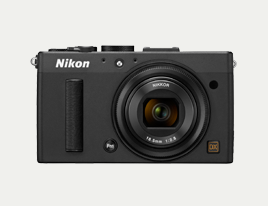
Announced during March 2013, the Nikon Coolpix A is both compact in size, but packs a wallop with a 16.2-MP DX-format CMOS sensor that has been used in Nikon DSLR models and a 28mm equivalent f/2.8 fixed lens. Make no mistake, the Coolpix A is small enough to fit in a coat pocket, at 4.37” x 2.52” x 1.57” (111mm x 64mm x 40mm) and 10.55 oz. (299 g). At this size, the wide-angle lens must be mounted rather close to the sensor; however, Nikon engineers reworked the sensor’s micro-lenses, so there would be little or no corner shading.

Other body features that clearly indicate the higher price point of the Coolpix A start with the construction. Aluminum alloy has been selected for the front and rear panels and the top plate is magnesium alloy. Despite its size and the lack of a true hand grip, the Coolpix A will feel secure in your hands with a small rubber surface on the top right of the back plate for your thumb and an elevated, well-textured rubber pad on the front right of the body for your fingers.

Any photographer that already owns a Nikon DSLR will find the user interface to be very familiar. Access the settings by pressing the [i] button, use the arrow keys to move across the screen, press the “OK” button twice: first to select a setting and then to confirm your choice.

Of course, for professionals to flock to the Nikon Coolpix A, as a second camera, requires that it delivers equally high-end image quality. Preliminary third party tests seem to conclude that both RAW and JPEG images are sharp, crisp and with excellent detail rendition at the lowest ISO setting of 100. For RAW images, ISO 1,600 still provides good, sharp images with very little appreciable noise. Jump to ISO 6,400 and the noise is rather evident. For JPEGs, the results are very similar; with noise having little or no effect at ISO 800 and just a bit noticeable at ISO 1,600. Even bumping ISO to 3,200 doesn’t render JPEGs unusable, especially if you keep print sizes small to medium. From ISO 6,400 and higher, noise has quite an effect on image quality.

Essential Features of the Nikon Coolpix A Compact Camera

  • 16.2MP DX-format CMOS sensor.

  • 18.5mm (28mm equivalent) f/2.8 lens.

  • ISO 100–6,400 (with 12,800 and 25,600 equivalent extension settings).

  • 3.0" 920,000-dot LCD.

  • 14-bit uncompressed NEF Raw shooting capability.

  • As many as 4fps continuous shooting.

  • 1080p movies at 24, 25 or 30fps.

  • i-TTL compatible hot shoe.

Appealing to the smaller markets of enthusiasts and serious DSLR owners with the Nikon Coolpix A and comparable models from Fujifilm, Sony and Sigma will make for a very competitive environment. There are simply not as many buyers for this kind of camera as compared to the “Golden Age” of point-and-shoots, which passed in a blink of an eye. Nonetheless, the Coolpix A appears to be a worthy investment for those photographers who have the skills and experience to utilize all its features, capabilities and benefits.

This blog post about the topic "Nikon Coolpix A Digital Camera: A First-Class Choice in a Second Camera" was first published on our website here https://www.photographytalk.com/photography-equipment-reviews/3195-nikon-coolpix-a-digital-camera-a-first-class-choice-in-a-second-camera

Top 8 Rumors Surrounding the Elusive Nikon D400

For years, Nikon enthusiasts have been sitting and waiting patiently for the arrival of the newest replacement in Nikon's top of the line DX format DSLR like Nikon D4s. In August 2007, the Nikon D300 was released, taking the flagship position from the D200 in the DX lineup. 

A few years later, when rumors about the D400 started to spread through the web, the D300S was released. Unshaken, Nikonians still awaited their D400 to appear in the near future. But Nikon surprised their fans with the release of the D7000 which created a new line of DX cameras in between that of the D90 and the D300. Two and a half more years passed, and the rumors started rising to the surface once again. Yet, the D7100 was the new camera released in early 2013. So where is the Nikon D400? When is it coming and what will it be like? Gathered here are some of the rumors and whispers of the internet as to the speculated specs and release of the much anticipated Nikon D400:

A 24 MP Sensor

While at one time this may have been very exciting, the fact that Nikon now has three 24 megapixel cameras dilutes the thrill of yet another. The fact that Nikon already has three cameras of the same megapixel count could possibly mean that the D400 will be different. If not by megapixel count, then perhaps by a new type of sensor. While having more megapixels is generally good, squishing too many on a DX sensor could affect the low light performance of the camera, in which case the D400 may actually have a lower megapixel count with better ISO performance and other enhanced features.

Better Low-Light/High ISO Performance

The rumored ISO range of the D400 is 100 to 6400. But isn't it about time that we broke that 6400 barrier? All of the current Nikon DX lineup has a standard ISO range of 100-6400. Of course, you can boost it to higher levels, though it may not look so good. In the D400 we want to see cleaner images at the standard ISO range and the ability to use higher ISO settings with useable results.

Full HD 1080p Video Capabilities

Video recording has become standard on DSLRs now, so Nikon's new flagship camera should not only include these capabilities but improve on them to make it a camera worth its title. HD video has been implemented in several cameras, but the quality and control has not always been great. The D400 should have better control over exposure, focusing, and panning quality.  

NIKON Prime LensesCANON Prime LensesSIGMA Prime Lenses
Nikon 24mm f/1.4Canon EF 24mm f/1.4L IISigma 24mm f/1.8 EX DG
Nikon AF-S 50mm f/1.4GCanon EF 50mm f/1.4 USMSigma 35mm F1.4 DG HSM
Nikon 35mm f/1.4GCanon EF 35mm f/1.4LSigma 50mm f/1.4 EX DG HSM
Nikon 85mm f/1.4GCanon EF 85mm f1.2L IISigma 85mm f/1.4 EX DG HSM
Nikon 300mm f/2.8G AF-S EDCanon EF 300mm f/2.8L ISSigma 300mm f/2.8 EX DG IF

Release Delayed Due to Flooding in Thailand

In late 2011, a devastating flood overtook much of Thailand. In its wake, it damaged a very important Nikon facility which housed many of the DX camera components. This could be the reason why we haven't seen the D400 yet. Obviously, Nikon needed to catch up on the DX products that were currently in production meaning the D400 could have been shelved until a later date.

Release Delayed Due to D7100

The D7100 was a big hit, and to release another DX camera with better specs would only hurt its sales. So Nikon may be simply giving time for the D7100 to shine and let consumers grab up as many of them as they can before they release a new flagship camera.

The 7000 Line and 300 Line Could Merge

It's been speculated that these two lines of cameras could merge. The 7000 line is just below the 300 and to further improve on the D7100 would be putting it awfully close to the soon-to-be-outdated D300S. This merger could produce a D400 or D8000, but either way it would be the new top of the line DX format camera.

Nikon Could be Waiting on Canon

Canonites have their own anticipations resting on the release of the rumored 7D Mark II. This DSLR would certainly be a rival to the D400. So perhaps Nikon is playing a waiting game. But are they waiting to release it at the same time to try to compete against Canon toe-to-toe? Or are they waiting for the release and hype of the 7D Mark II to die down before unveiling their own masterpiece?

D400 May Not Even Exist

In the most disappointing speculation, the D400 may not even be coming. Perhaps Nikon has decided to make the 7000 line their new top line and keep the D600 as a bridge to full-frame cameras. Since very little actual evidence has been given to prove the existence of the camera even being developed, this is a sad, but real, possibility.

This article about "Top 8 Rumors Surrounding the Elusive Nikon D400" was first published on our website here https://www.photographytalk.com/photography-articles/3292-top-8-rumors-surrounding-the-elusive-nikon-d400

Sunday, 27 September 2020

2 New Nikon Zoom Lenses with More Versatility for Digital Photography Pros and Enthusiasts

 Announced June 14, 2012, Nikon’s AF-S DX NIKKOR 18–300mm f/3.5–5.6G ED VR and the AF-S NIKKOR 24–85mm f/3.5–4.5G ED VR lenses are designed with excellent versatility for a wide range of digital photographers shooting with DX or FX-format cameras.

The NIKKOR 18–300mm VR Zoom Lens

DX-format photographers will discover the longest focal range of any Nikon lens when they put their hands on the 18–300mm f/3.5–5.6G. Its amazing 16.7X ultra-zoom ratio is the equivalent of 27–450mm in FX/35mm format. DSLR photographers at all skill levels will have more creative opportunities, from wide-angle for spectacular landscapes to mid-range focal lengths for pleasing portraits to extreme telephoto to frame distant wildlife, sports, action and travel images. Details in close-up photos will look particularly sharp and color-rich when shooting with this 18–300mm VR lens and its 1.48-foot minimum focusing distance at 300mm and 1:3.2X maximum reproduction ratio.

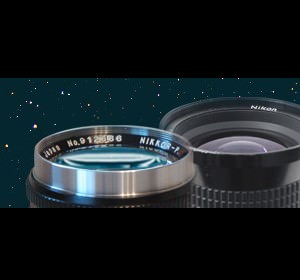
nikkor_lenses_pic_000 image

There were 9 real customer reviews of the Nikkor 18-300mm f3.5-5.6G ED VR lens all giving it 4-5 star rating. If you would like to read these reviews you can do so here.

Photographers will appreciate Nikon’s design philosophy that results in a compact and lightweight ultra-zoom lens with a large f/5.6 aperture at 300mm. Images can be captured at faster shutter speeds, which deliver a narrow depth of field. Videographers will be able to take full advantage of the compositional flexibility of the 18–300mm f/3.5–5.6G, recording and editing more creative sequences of close-ups, middle-distance framing and telephoto footage.

The people at Nikon have built the AF-S DX NIKKOR 18–300mm f/3.5–5.6G ED VR lens with outstanding optical performance, based on its 19 glass elements in 14 groups. Included are three Extra-low Dispersion (ED) and three aspherical glass elements to reduce chromatic aberration to a negligible level, regardless of selected aperture. The diaphragm consists of nine rounded blades that create excellent bokeh, or background blur, to make digital images more dynamic and with more dimensionality.

Photographers shooting with the AF-S DX NIKKOR 18–300mm f/3.5–5.6G lens will know it is securely protected by setting the zoom lock switch. The lens will require less room in the bag and won’t extend to its full length.

The NIKKOR 24–85mm VR Zoom Lens

Digital photographers committed to full-frame image making will enjoy the extraordinary versatility of the AF-S NIKKOR 24–85mm f/3.5–4.5G ED VR lens. For the enthusiasts, it’s an excellent all-purpose lens for family events, casual fun and travel. It’s also a preferred focal range for professionals shooting news, landscapes, architecture and portraits.

Both new NIKKOR lenses features Nikon’s Vibration Reduction (VR) technology, but the 24–85mm has the added capability of Auto Tripod detection. Vibrations are dampened even further with the camera attached to a tripod. The optical configuration of the 24–85mm is 16 elements in 11 groups. An additional Extra-low Dispersion (ED) glass element and three aspherical elements contribute to crisp, natural-looking images.

There were 11 real customer reviews of the Nikkor 24-85mm VR zoom lens all giving it 4-5 star rating. If you would like to read these reviews you can do so here.

Nikon is scheduled to release these two new NIKKOR lenses for purchase during the end of June 2012.

The suggested retail price for the AF-S DX NIKKOR 18–300mm f/3.5–5.6G ED VR lens is $999.95, the AF-S NIKKOR 24–85mm f/3.5–4.5G ED VR lens at $599.95.

Your feedback is important to thousands of PhotographyTalk.com fans and us. If this article is helpful, then please click the Like and Re-Tweet buttons at the top left of this article.

Photo © 2012 Nikon Corporation

This article about the topic "2 New Nikon Zoom Lenses with More Versatility for Digital Photography Pros and Enthusiasts" was first published on our website here https://www.photographytalk.com/photography-equipment-reviews/2466-2-new-nikon-zoom-lenses-with-more-versatility-for-digital-photography-pros-and-enthusiasts

Digital Photography Equipment Review—The Nikon AF-S Nikkor 16–35mm Zoom Lens

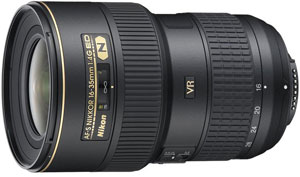
 What distinguishes the Nikon AF-S Nikkor 16–35mm 1:4G ED VR zoom lens from all other ultra-wide-angle lenses is that it’s the first with optical image stabilization, Nikon’s Vibration Reduction (VR) technology. The Nikkor 16–35mm is fully compatible with both full-frame DSLR and DX-body cameras. At an estimated selling price (ESP) of $1,259.95, Nikon has positioned it to be a lower-cost option to the 17–35mm 1:2.8D or the 14–24mm 1:2.8G, for example.

nikon_nikon-afs-nikkor-1635mm-f4g-ed-vr_400x400_s image

It’s likely Nikon was also thinking of competing with the popular Canon's EF 17–40mm f/4 L USM zoom lens, which many photographers have purchased for its exceptional image quality as well as low price tag, compact size and light weight. Gaining that VR designation has made the Nikkor 16–35mm five inches longer than the Canon and weighing a pound and half more.

In another comparison, to the 16–35mm f/2.8 lenses from Canon and Sony, the Nikkor 16–35mm is also longer and just a bit heavier than the Canon.

Optical Stabilization

The most obvious difference in the chart above is the absence of optical stabilization in the Canon and Sony lenses; although, they do gather twice as much light as the Nikon, as fast f/2.8 lenses. There’s always seems to be a trade-off. The primary upside of optical stabilization on the Nikon lens is that a photographer can hand hold his or her camera and produce sharp images four stops slower.

Nikon D600 | Nikon D7100 | Nikon D800 | Canon 5D Mark III | Canon EOS-Rebel T4i

Nikon’s VR II technology also gives its Nikkor 16–35mm zoom lens another advantage: a more complex optical configuration. Relatively slow wide-angle zooms don’t typically have 17 glass elements on 12 groups, plus a few unusual elements (three aspherical and two Extra-low Dispersion [ED] glass) to combat aberrations. Flare is also reduced with a Nano-Crystal coating.

It’s understandable that some photographers may scratch their heads when they see optical stabilization on a wide-angle lens, since it is much more critical when using a long telephoto lens. It’s not just a frill, however. Photographers will have more shutter speed, aperture and ISO flexibility hand holding their cameras. Smaller apertures can be selected to widen the depth of field, longer shutter speeds are available to use motion blur creatively and it’s easier to work in extremely low light.

Image Quality

In total, image quality could be described as spectacular. The center of the frame is extremely sharp at virtually all settings. At 16mm or full frame, the farthest parts of the corners will exhibit some softness, but the sharpness returns at the typical apertures. Chromatic aberration is almost non-existent. The lens’s amazing rendition of fine detail is clearly evident in every portion of the frame, especially at 24mm and f/8 or f/11.

Photographers will be much less thrilled with the enormous barrel distortion of the Nikkor 16–35mm zoom lens, at 16mm and full frame. It’s simply more than it should be when compared to conventionally corrected SLR lenses and many Micro Four Thirds lenses. The distortion will be most noticeable in architectural and interior photos with many straight lines.

Pros

  • Very high image quality on both DX and FX formats.
  • F-mount for Nikon and Fuji DX and FX format DSLRS.
  • Excellent build quality with dust and moisture sealing.
  • Nine-blade circular aperture for highly acceptable background blur.
  • Highly effective optical image stabilization.
  • Fast, silent auto-focus with manual override.

Cons

  • Huge barrel distortion at 16mm on FX cameras.
  • Relatively big and heavy for its class (larger than many f.2.8 wide-angle zooms).
  • Slightly inelegant flare handling.

Overall, the Nikon AF-S Nikkor 16–35mm 1:4G ED VR zoom lens is an excellent choice. It’s provides outstanding value, with the addition of optical stabilization (VR II), and, for many photographers, will be a very practical lens for many types of photography (landscape, for example) and shooting situations. Its flaws don’t put it at the head of the class, but it passes most of the crucial tests and still graduates with flying colors.

Brett Harkness Canon Photography Review: The Canon EF 15mm f/2.8 Fisheye Lens

 As one of the most sought-after social/wedding photographers in the UK and across the globe, Brett Harkness knows Canon cameras and lens very well, since they are the only equipment he uses. PhotographyTalk is pleased to share Brett’s insights and honest appraisals of Canon products.

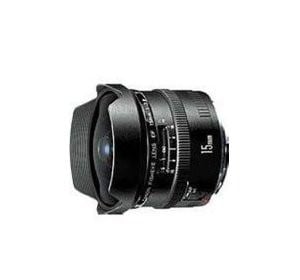
Canon_EF_15mm_fisheye_lens image

Brett scores the Canon EF 15mm f/2.8 Fisheye lens 9 on a scale of 1 to 10.

There were 35 real customer reviews of the Canon EF 15mm f/2.8 Fisheye lens, all giving it a 4-5 star rating. If you would like to read these reviews you can do so here.

When I first purchased this lens some years ago, I remember using it at my first wedding and hardly taking it off the camera! Now, I would say I only use it once or twice during a wedding because my style has changed so much.

I shoot primarily very large groups of more than 70 people with the 15mm Fisheye. The largest group shot being 500. Optically, it is probably the best fisheye available, although it is somewhat wasted in my bag; however, it’s a great little lens to have for the right situation!

These are my opinions on how I use this lens every day of my life. If it feels good in my hands, then I use it! This equipment is an extension of my eye and how I see my world and the social world within which I work. That was why I started to use Canon products more than 20 years ago. If a piece of equipment allows you to capture your vision, then use it. It is only when a piece of equipment is a hindrance that you should change it.

If you would like to see more examples of my work please go to www.brettharknessphotography.com.

You can also join me on Facebook, Twitter (@brettharkness), Instagram and Flikr. You’re also invited to visit our wonderful training site with a host of information to watch, read and download: www.brettharknessphotography.com/training

The opinions in this article are those of Brett Harkness and are not necessarily endorsed by PhotographyTalk.

About Brett Harkness: Brett Harkness is a highly regarded UK photographer, who, with Kristie, his wife and business partner, specialize in in all forms of social photography, both studio and outdoors, in the UK and overseas. Brett was born during 1972, and was graduated from Nottingham Trent University, where he studied photography. He spent the next 5 years working on board cruise ships in America and the Caribbean, where he learned the basics of working with a great diversity of people, as he photographed their vacation activities as guests. Couples around the globe seek Brett’s signature style for their wedding photography. He and his wife operate a studio and training facility in a converted wood mill outside of Manchester, England. They offer courses in lighting, lifestyle, and wedding photography.

This article about the topic "Brett Harkness Canon Photography Review: The Canon EF 15mm f/2.8 Fisheye Lens" was first published on our website here https://www.photographytalk.com/photography-equipment-reviews/2562-brett-harkness-canon-photography-review-the-canon-ef-15mm-f28-fisheye-lens